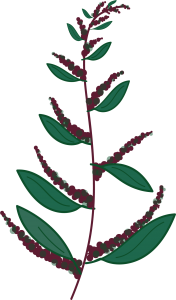
I recently returned from a BBQ and humidity saturated collection trip in Texas. Accompanying my lab mate, Felix Beaudry, we set out to collect within and between population data on his dioecious, sex-chromosome containing study species, Rumex hastatulus.


Unlike most animals, sexual strategies vary along a continuous axis in flowering plants. Sex roles vary between populations and species from hermaphroditic (i.e. both sexes on the same flower, and sex allocation varying between flowers) to dioecious (separate sexes), with a handful of different combinations of the two existing in between. Only four plant families, however, have sex chromosomes; these contain the sex determining region and sex-linked genes that evolve as a result of suppression of recombination between differentiating homologous autosomal chromosomes following from antagonistic selection between sexes. One of such families, Polygonaceae, contains the genus Rumex which has a suite of variation in sexual strategies as well as the age and type (e.g. XY vs. XYY) of sex chromosomes present across species.
As we learned, there a few different Rumex species in Texas; in addition R. hastatulus, we also ended up collecting the hermaphroditic outgroup, Rumex crispus, pictured below.


Felix and the lab are hoping to harness within population variation in R. hastatulus to locate expression differences across the genome between males and females, as well as answer other cool questions around explaining the causes and consequences of sex determination and dimorphism.
Other highlights of the trip include:
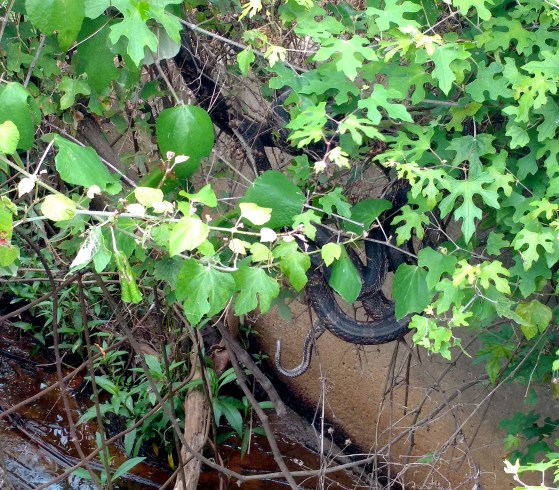
– Catching two large Texas Rat Snakes mid-copulation
– Lovely wildflowers (yet to be identified)


– Cool insects!


 Kreiner Lab